Showing posts with label Integrating Science with Common Core. Show all posts

Monday, April 14, 2014

Must Read Mentor Texts and #IMWAYR April 14th

Today we started a unit in Science on Scientific Thinking and the Scientific Method.  Normally, you would do this at the beginning of the year, but it fit with what I wanted to cover right now.  We are finishing up the Civil War in US History.  After that, I want to spend the last six weeks or so covering the US Regions.  We have been looking at Ecosystems in Science, so we will look at how the Ecosystems and climates, etc. are different in the different US regions. I am putting my students in groups.  Each group will have a region.  They will choose an experiment based on features on their region, as well as conduct a research project to find real world problems and solutions in their region.

Before we can do all that though, we needed to talk about the Scientific Method.


Today we read 11 Experiments that Failed. (I am linking up with Collaboration Cuties.) It is a great story to introduce the Scientific Method.  The little girl tries all these experiment ideas that go completely wrong.  The kids pick up on the steps and process super quick from the story though.


We followed it by completing some activities from this Scientific Inquiry Unit, which worked out great. We will complete some more of these, while they start identifying what they want to research for their region.

Some other things I read this week:
Must-Read Monday Linky


We read Come on Rain today to introduce our fictional narrative unit.  We discussed how it was a great story for small moments.  We also identified all the sensory detail and descriptive details. There are some great descriptive sentences in this book, so it will flow well into also doing some poetry over the next couple weeks. We will be using a mentor sentence from the book this week from one of Jivey's mentor sentence units.


On my own, I have been reading The Absolutely True Diary of a Part-time Indian.  I really like Sherman Alexie.  I first read one of his books in a graduate literature class.  It deals with some real issues about the poverty, alcoholism, and depression that exist on many of the Native American reservations.  Alexie is a very witty writer, and his books are very enjoyable to read while also very real.  I am about half way through and really enjoying the book.


I started an ebook I checked out from the library called The Wicked and the Just.  I love Historical Fiction and was interested in learning more about the history of England taking over Wales.  I am not enjoying the book though, so I am not sure I will finish it.  The characters are really flat with no depth, which is sad because the history is interesting.


I am just starting The Diviners by Libba Bray.  I have loved all of Libba Bray's books.  Loved! So when I saw this one, I had to read it.  It takes place in NYC in the 1920's with some supernatural stuff.  I am curious to see how it measures up to her other books, which are some of my favorites.


What are you reading this week?

Monday, July 8, 2013

Mentor Text - The Junkyard Wonders: Incorporating Engineering in Literature

So you would think come summer you would have more time for blogging, but the last couple weeks have been crazy with the drama over totaling my husband's old truck and getting a new truck.

Anyway...drama over.  Yesterday, I remembered it was time for Collaboration Cuties' Mentor Text Linky. 


When I saw it was a Language Arts Mentor Text, I was excited to blog about one of my favorite read alouds. I have mentioned this book before. A couple years ago I was introduced to Patricia Polacco's book The Junkyard Wonders at a Balanced Literacy training.  I fell in love with the book. It is a beautiful story about friendship, creativity, and uniqueness.


This book had also been on my mind because I was researching the Next Generation Science Standards on Friday.  I remember reading this post at Corkboard Connections.  In this post, Wendy and Cheryl of Get Caught Engineering talk about how Engineering will be a large part of the new Science Standards.  They have some great ideas for incorporating Engineering in Literature.  I immediately thought of The Junkyard Wonders. In this book, the main character, Trisha, goes to live with her dad because she wants a new start.  She felt dumb at her old school.  She discovers she has been placed in a special class called The Junkyard. Everyone in  the Junkyard has something that makes them different. Mrs. Peterson, their teacher, places them in groups called tribes and immerses them in a year full of truly hands-on learning. At one point, they actually go to a junkyard and collect things to make something new. The message in the book is about how we all have something special to offer and no one deserves to feel unloved. It is a sad book because one of the classmates dies.  I rarely can read this book aloud without getting teary, but I love the story!  You can use this story to discuss story elements, theme, mood, visualizing, character traits, etc. 

I love this story enough I decided I finally needed to make a unit to go with it.  (It took me most of the day to finish the unit.  That is why I am a day late with this blog post.)  The unit is 18 pages and has a variety of organizers to analyze literary elements.  I also included several writing assignments and a project idea.  I created it with the 4th and 5th Grade Common Core Literature Standards in mind.


Mrs. Peterson reads them a definition of genius on the first day of school that I love.  I think I want to make a giant poster of this quote!  Here is a free copy of the quote to display in your classroom. You can also get it at my TpT store.


Classroom Freebies Manic Monday

You could use this quote to prompt great discussion and writing.  I also love the idea of using this book to prompt discussions of inquiry based learning, working in groups, creativity, etc.  I think often we feel so pressured to be worried about meeting certain curriculum goals or testing expectations, that we often forget that learning should be fun and creativity should be fostered without limitation.  We often put kids in a box when we should be encouraging them to just follow their natural bent to think outside the box. I look forward to discussing this definition of genius with my gifted students.  How do you foster creativity in your students?  Have you ever tried incorporating engineering in literature?

Tuesday, May 7, 2013

Biomes, Adaptations, and the Magic School Bus. Oh, my!

I realize I have not posted in a week.  I came down with a cold last Tuesday night, and since then it has taken all my energy to get through a work day and then go home and nap.  I also slept the entire weekend.  Apparently, this cold told me I needed rest.  I am ready to get back into my workout routine and even get back to blogging, etc.
Photobucket

I guess for this week, I am going to say my Tried It Tuesday is a thematic unit. We have been studying biomes in Science and English the last couple weeks, and so far it has been one of my favorite things we have done all year.  We have used lessons from Science, we have done a webquest, we have done projects, and we have done a lot of reading nonfiction.  I have been creating handouts to review all of the nonfiction Common Core Reading Standards while they read their book. We will do a major informational report next week after all of their research and reading for some more writing.  (Hopefully in the next couple days I will have a whole Biome research unit to post in my TpT store.  I am almost done with it.)  After this, we will spend the last couple weeks of school immersed in Westward Expansion.  I found it was too hard to do the Westward Expansion and Biome activities, so I decided to just focus on each for a couple weeks.

This is our last week of studying biomes. It really has been a fun unit.  I have loved watching my students practice their nonfiction reading skills, research skills, and the creativity they have shown.
For their final project on the unit, I gave them a menu of options. Their projects are due next Monday.  One of my students made a commercial for his biome (the temperate Deciduous forest) using iMovie.  You can click here to view the video. One of my goals this summer is to play with iMovie and Garage Band more to think of fun ways to use them next year.

Yesterday, we were talking about adaptations.  They spent some time reading their nonfiction biome books and looking for at least 5 plants with descriptions of the plant and the adaptations.  They had to make a 2 column chart.  You can see a picture of mine below. I usually try and do some of the same assignments they are doing.  I am reading about Grasslands and Prairies.

 photo 3e54489d-14ae-4065-bca1-fe7e558b0f66_zpsd64785db.jpg

Then, we watched the Magic School Bus episode "All Dried Up."  The episode talks about adaptations and conditions in the desert.  In the episode, Arnold who is usually terrified of field trips is prepared for once.  He has created a field trip survival guide and survival kit.  I thought this was an awesome idea and felt totally inspired. Here is a copy of the episode:


My students are still reading and taking notes in their books about adaptations.  Tomorrow they are reading about animal adaptations. They will be creating their own field trip survival guides for their biome (just like Arnold did in the Magic School Bus episode).  I made a little booklet for them to fill out.  You can get a copy here.
Arnold made one for the desert, but each student will make their own guide for the biome they have been studying.

Today the students had to make a habitat for a polar bear that lives in a zoo in Arizona.  They had to create a model of their habitat and write a paragraph about it.  They had the option of drawing it, designing it on the computer, or trying to make it 3D.  Most of them opted to make it out of paper. This is one of my favorite student made polar bear habitats:

 photo 9E53BDDB-46EB-45A7-9F88-163A16339F0F-42557-00000C0F6201816B_zpsffef88c7.jpg  photo 6684DC01-509C-47DB-A746-0737CFDEBF79-42557-00000C0F64B93530_zpsdfd18139.jpg

Make sure you check out Holly's 500 Follower Giveaway.  There are so many prizes, I got tired reading them all!  I am contributing $15 to my TpT store.


Like everybody else, my TpT store is on sale for 20% off today and tomorrow.  If you enter the code, TAD13, you can save up to 28% off.  What are your favorite thematic units for upper grades?

Tuesday, April 30, 2013

Biomes of the World Webquest Freebie

Today is Tuesday, which means it is time to link up with Techie Tuesday and Tried It Tuesday.
Photobucket


We have been studying biomes.  I have been loving loving this unit!  My students are reading nonfiction books on biomes and practicing the different nonfiction Common Core Standards for Informational Text while reading.  It has been a great end of the year project and fabulous interdisciplinary unit.

I decided I also wanted to try a webquest with my students.  I decided to create my own.  We have been working on it the last few days for Science, and it has been really fun to watch them engaged in student-centered learning, practicing reading and note-taking skills, as well as being creative. We used the Biomes of the World website for our research.   They had to take notes on each of the biomes and then come up with their own idea for a zoo to represent all of the biomes.  They will then create a brochure for their zoo and a map of their zoo.  We are done with the web research and still working on the zoo projects.  (I will show you pictures of the maps and brochures when we are done).

You can get a copy of the webquest here.


You can get a copy of the notes form I made here. There is a note page for each biome.
Here was a post from about a week ago from Technology Rocks Seriously with lots of different online games for kids to learn about animal habitats.  I plan on checking them out to have my students try some of them.

Have you used webquests?  This was my first time to make one, and I have really enjoyed watching my students work on this project.

Sunday, April 21, 2013

Common Core in the Content Areas: Biomes and Habitats

My new weekly series is called Common Core in the Content Areas. Eventually if people show enough interest I think it would make a great linky.

Jessica at Ideas by Jivey was kind enough to help create a great blog button for the series.

Ideas By Jivey

Since it ties into Science, I am also going to link up with Collaboration Cuties' Must Read Mentor Texts since I am offering book suggestions for Science.


This week I am going to share some ideas on studying Biomes. I decided I wanted to do an end of the year project to incorporate Science and Social Studies as well as Reading and Writing.  I have tried to incorporate a lot more Nonfiction this year, but I felt that the Informational Text Common Core Standards are the ones I really want to review at the end of the year. Informational Text is much harder for students to read because they have to be much more active readers. I decided that a project on biomes would be a great way to tie up the year. With tomorrow being Earth Day it is also a great time to begin our discussion of biomes.  I am going to be stalking all the blogs I follow and Pinterest for some cute Earth Day freebies to tie in tomorrow.

We introduced biomes last week with a Discovery Education video to preview all of the biomes. Then, the students had to choose a biome they wanted to learn more about.  I asked all of them to check out at least 2 books at the library on their biome to bring to class tomorrow.  We are going to practice all of the Reading Informational Text Standards over the next several weeks while they read/learn about the plants, animals, climate, etc. of their biome. I have been looking for some cute books that would also make great read alouds over the next couple weeks.  The students will be reading Nonfiction independently, but I will probably choose some other texts for read alouds.

I found a unit on TpT that is going to make a great starting point for our research. Today I just need to finish my informational text graphic organizers and plan for the unit.  (Every weekend I plan on getting so much accomplished but in my effort to be eat better, exercise more, and be more balanced I have found I have less time at home for blogging, grading, planning, and creating products.)  The biome unit is by Tanye Rae Designs.
 
The unit has some great research organizers, handouts, and even book suggestions for each biome. After going through the library, here are some books I found on biomes, ecosystems, and habitats.  I am going to have my students research the plants, animals, climate, and the various plant and animal adaptations for these biomes. We also probably talk about food chains during this unit.
 
Last week, we started reading What is a Biome? by Bobbie Kalman.  It is a great overview book.  I would say it is probably more effective read independently or in small groups than whole group. We are going to read it in small chunks. (I found the Discovery Education video a more engaging preview to the unit.)  It will make a good book to do mini-lessons on reading informational text though as I have them practice different reading skills over the next couple weeks.
You can never go wrong with Magic School Bus.  I found a couple of Magic School Bus books related to Biomes.  The kids always enjoy the videos more but the books are great as read aloud. To talk about animal habitats and ecosystems, there is The Magic School Bus Explores the World of Animals.
 
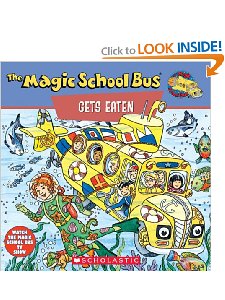
To talk about Food Chains, there is The Magic School Bus Gets Eaten.
 
I found a cute book called Crinkleroot's Guide to knowing Animal Habitats.  An old man is your guide and leads you through ways to find animals in different habitats. There is a whole Crinkleroot series of books.

I always love searching through the Graphic Novels in the kid's section for ideas as well. I found
A Journey into Adaptation with Max Axiom.  We will read this when we talk about adaptation.

If you go look in the Junior Nonfiction section at your library under 577 and 578, you can find a ton of nonfiction books on each of the biomes.  These are the books we will use for their independent research.  As we get started, I will share more of my ideas and finds on studying biomes.  Do you have any fun books or lessons you use when studying biomes, food chains, ecosystems, habitats, or plant and animal adaptations?

Don't forget about my Be a Better You Giveaway.  You can earn a $30 gift card to a store of your choice to get healthier for summer.


Wednesday, February 13, 2013

Cornell Notes Templates for Science - Freebie

Today I decided to face the fact that my student need help with note-taking.  I have put off dealing with it while we dealt with more pressing needs.  I decided to jump into note-taking today.  I quickly created some Cornell Notes forms in Microsoft Word and printed them out.  They worked well even though my students seemed a little overwhelmed by the process.  Note-taking is a vital study skill as students get older, and it will also help to deepen their comprehension.

I decided to come home and create some cuter forms though.  I decided I would rather have ones that look a little different for each subject. So today I have a freebie for you.  It includes Cornell Notes templates and writing paper for Science.  You can get it here through Dropbox or at my TpT store.


I also made some Writing Paper to encourage content writing in Science.  It includes a planning page with a web and paper that has a place to utilize the Writing Strategy RAFT (Role, Audience, Format, Topic.)

I hope you find it useful.  I figure if we are going to use note-taking in multiple subjects the graphics will make it easier for them to distinguish which notes go with which classes. How do you take notes in class?

Thursday, November 29, 2012

Integrating Nonfiction Studies with Science and Social Studies

The Common Core Standards put as much emphasis on nonfiction as they do literature.  It is important to find ways to incorporate nonfiction into your classroom. We have been studying weather over the last couple weeks in Science and previously we talked about earthquakes, volcanoes, and tsunamis. I decided for Science this week to grab a big stack of nonfiction books at the library.  I checked out books on different types of storms and natural disasters.  I grabbed Hurricanes: Earth's Mightiest Storms because it is a CC Examplar text, as well as several books by Seymour Simon since his Volcanoes book is an exemplar text. 
I also grabbed other books on tsunamis, mudslides, drought, wildfires, etc. The students had to choose a topic and read the book.  Their task is to create an alphabet book over facts they learned about the weather/storm/natural disaster.  I gave them the option of making the alphabet book as an actual book by hand or making a PowerPoint with a slide for each letter.  They love their Mac's so they all chose a PowerPoint.  We have read other alphabet books already this year on other topics, so they were familiar with the text structure of an alphabet book.

It has been a good assignment though.  I tasked them with the idea that all of their facts have to come from the text and not the internet.  We were able to talk about reading nonfiction with a purpose.  It also gave us a chance to review text features.  Since they are having to use all 26 letters of the alphabet, it makes them think a little differently.  We also talked about helpful resources for this task are to use the index and glossary at the back since they are alphabetized.  How do you incorporate nonfiction? 

I like that they are having to read a longer text and not just an article.  At the end, I am going to have them answer some general questions on the their text.  So, some of them may have to go back and read a little more closely.  Truthfully, this is how many of us read nonfiction though.  Authentically, we often skip around, scan the facts and pictures, skip to the chapters we are most interested in, and then go back and reread.  I want to help them to become authentic and enthusiastic readers.  How do you incorporate nonfiction to meet common core?

Wednesday, November 7, 2012

Text Suggestions on Hurricanes and Teachers Helping Teachers

Happy Election Day (or what remains of it).  I have been watching the election results and dozing.  It is so hard to sit still at the end of a day and stay awake (even when it is important).

I just wanted to share a quick post on hurricanes in case you are trying to help your students understand Hurricane Sandy.  I am going to share some text suggestions on hurricanes you could use with your students.

First, I wanted to mention an opportunity if you are looking for a way to help out teachers who have been affected by the hurricane.  By now, you are probably aware of this, but I want to pass it on just in case.  Laurah at the ESOL Odyssey is sponsoring an opportunity for Teachers to Help Teachers.  She has put in a ton of work into organizing this, and it makes me proud to be a teacher when we work together to support one another. There is a form you fill out to choose an item from your store to donate to teachers in need.  You also can blog about it and link up to the linky party to show your support. Many teachers have lost a lot of their materials, and this would would be one way you could help them rebuild.

My students have been studying fast changes to the earth, so we had already been discussing earthquakes, volocanoes, and tsunamis.  We are working on discussing Atmosphere and Air and about to begin our discussion of weather.  As it fits in with the rest of these discussions, I am adding some additional discussion of hurricanes.

Last week we watched this video on Hurricanes from Brainpop. We also watched a Discovery Education video on how hurricanes are formed.  Here is a link to StudyJams and some videos related to weather.  Here is a Magic School Bus episode on Air, which we will watch as part of our discussion of atmosphere and air. 


Now, some text suggestions on Hurricanes:

Looking at several texts on hurricanes is going to give us some opportunity to practice some of the 5th Grade Common Core Reading Informational Standards.

RI 5.5 Compare and contrast the overall structure (e.g., chronology, comparison, cause/effect, problem/solution) of events, ideas, concepts, or information in two or more texts.

RI 5.7 Draw on information from multiple print or digital sources, demonstrating the ability to locate an answer to a question quickly or to solve a problem efficiently.

RI 5.9  Integrate information from several texts on the same topic in order to write or speak about the subject knowledgeably.

We will start by discussing as a group what questions we might have on hurricanes.  Some examples might be:
How are hurricanes formed?
How are they detected?
What can people do to prepare?
What kind of damage to they cause?
How do people rebuild?
What makes hurricane conditions more dangerous?

We will then read one book together and make a 2 column chart for questions and answers. Students will then practice the skill on their own by reading some books independently and putting questions and answers. I may even have some students read about hurricanes and other students read about tornadoes, wildfires, tsunamis, etc. for some variety.

Magic School Bus has a a book called Inside a Hurricane.  My library had multiple copies of the book, so I am debating if I want to do this as a read aloud or have them read it in small groups.  I may use this one as the read aloud. This would be narrative nonfiction as it presents nonfiction information as a fictional story.

Hurricanes: Earth's mightiest storms is an exemplar text for Common Core. It has a lot of historical information on Hurricanes and a lot of pictures. I am actually debating on using this book as the read aloud as well since it is an exemplar text and would be a good book for finding answers to questions. This might be one some students would struggle to read independently as the information is more dense.  By having students read with questions in mind, it gives them an intent for reading.
Do Tornadoes really Twist? Questions and answers about Tornadoes and Hurricanes is a book that is structured as basically questions and answers.
I actually would like my students to read all three books.  We may do one all together and then they can read the other two in stations or groups. We will then compare/contrast the structure of each book.  For each one, I will have them write questions and see if they can find the answers. We will discuss the differences in how the information is presented and if one structure we felt was more effective than another.  This would also be a good opportunity to discuss text features for each text structure.

At the end, they will use the information from all three books to write about what they learned about hurricanes, integrating information from multiple sources.

We may extend this skill by having them the next week each read a book and an article on different types of storms/natural disasters.  I will have them use the same process of writing questions and answers.  They will then write a short presentation/speech on what they learned to present.  I think having them speak on what they learn will be more engaging when there is some variety to the topics.  We will probably just discuss as a group what we learned about Hurricanes.  I may even have them research ways they could try to help efforts for Hurricane Sandy, such as donating to the Red Cross or have them see if there are places to help/donate to kids that have been affected. How are you discussing hurricanes in your classroom? How are you using the Common Core Informational Standards?

Pin It button on image hover